Weddings
The Complete Guide to Choosing a Texas Hill Country Wedding Venue
May 9, 2026 · 11 min read · By Rio Cibolo Ranch
Choosing a Texas Hill Country wedding venue is the single biggest decision a couple makes during the entire planning process. It sets the date, anchors the budget, dictates the guest experience, and quietly decides what every photograph will look like for the rest of your life. And yet most couples make that decision based on a thirty-minute walk-through and a pretty Instagram grid. The Hill Country has dozens of beautiful venues. They are not all the same, and the differences only show up once you start asking the right questions. This is the guide we wish every couple had before they signed a contract.
We've hosted weddings at Rio Cibolo Ranch since 1987 — small intimate ceremonies under the cottonwoods, three-hundred-guest celebrations in the hall, and everything in between. What follows isn't a sales pitch for our property. It's the honest framework we walk couples through during a tour, whether they end up booking with us or not.
Why the Texas Hill Country Keeps Winning
The Hill Country is the most-booked wedding region in Texas for a reason that has nothing to do with trends. The light is good. The land rolls. The trees are old. The weather, with the right month, cooperates. And the region sits inside a comfortable drive of San Antonio and Austin — meaning out-of-state guests can fly into one airport, drive thirty to ninety minutes, and be at your ceremony.
But the Hill Country is also a category, not a location. A wedding venue inside a polished resort and a wedding venue on a working ranch are both technically Hill Country weddings, and they are utterly different events. The first decision a couple really makes isn't venue — it's tone. Manicured estate? Working ranch? Vineyard? Riverside? Get clear on the tone before you tour anything, or you'll fall in love with whatever venue you happen to see first.
Ceremony Sites: The Question Most Couples Forget
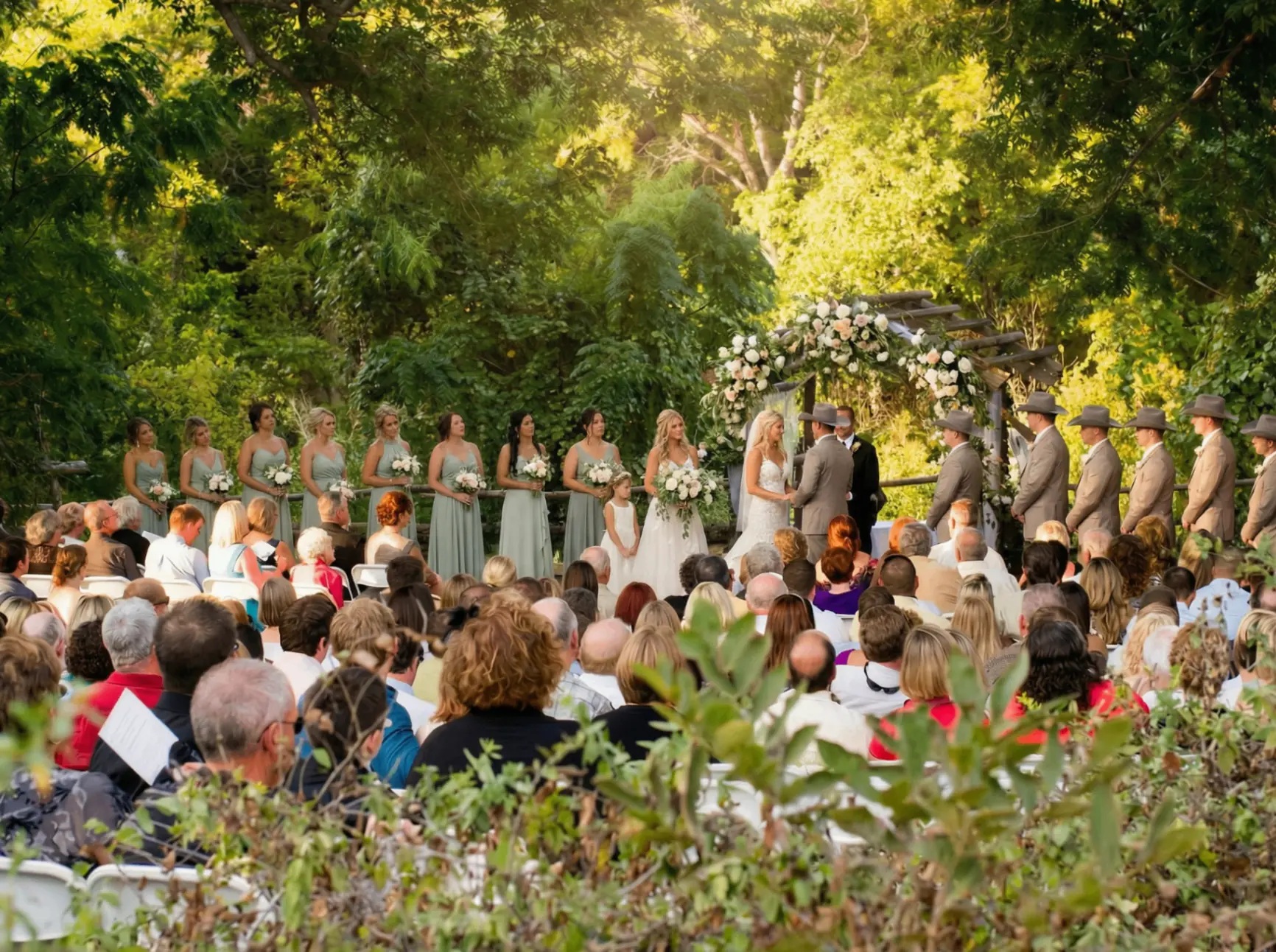
Every venue can show you their ceremony site on a sunny seventy-two-degree day in October. That's not the question. The question is: what does this site look like — and feel like — at three p.m. in July? At four-thirty p.m. in December when the sun is already low? In a fifteen-minute thunderstorm in May? A real Hill Country wedding venue has answers, and ideally has options. A single ceremony lawn with no shade and no plan for weather is a venue that's about to ruin somebody's wedding.
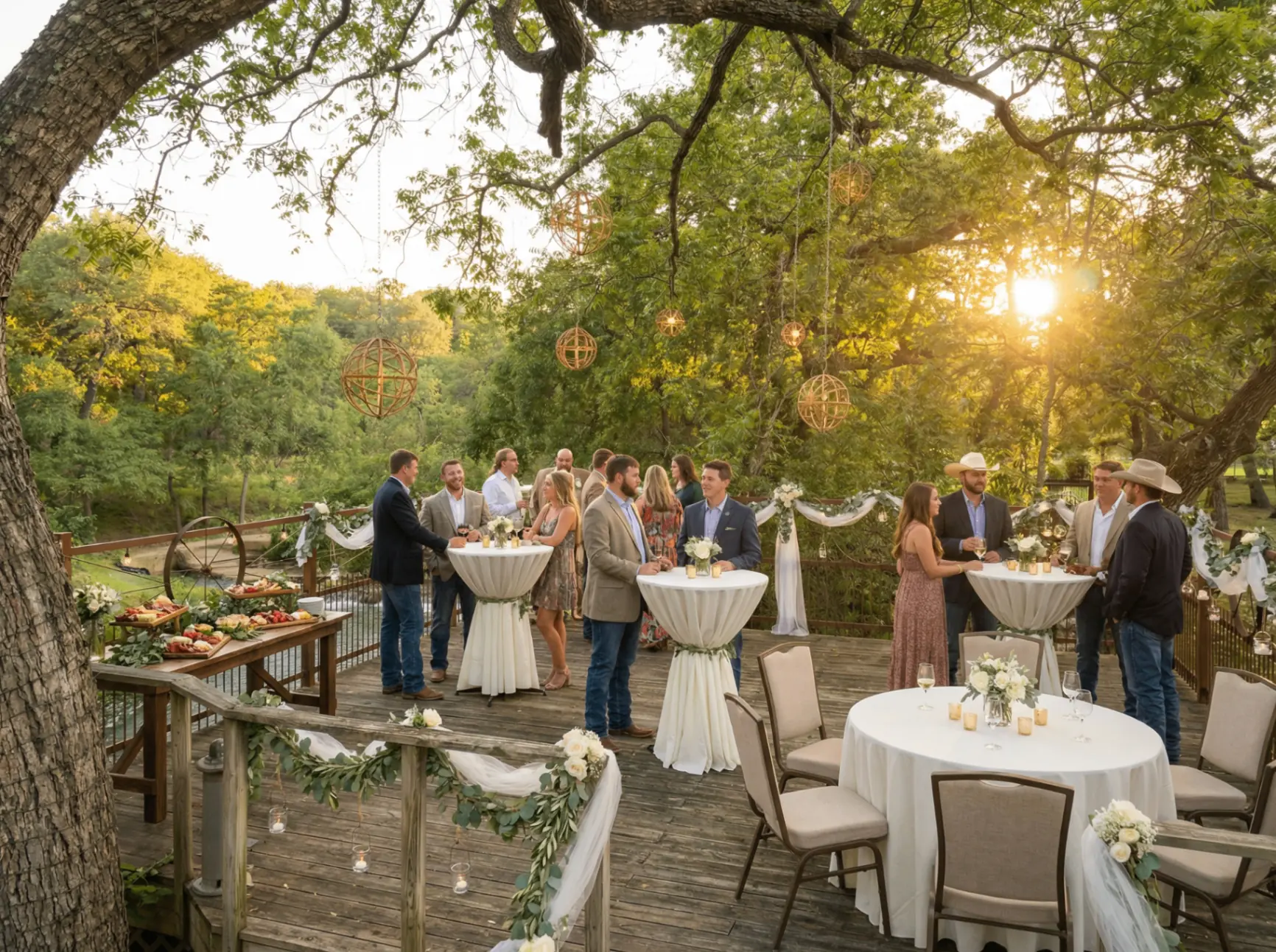
Look for a property with multiple natural ceremony sites — under mature trees, near water, against an architectural feature — and a clear, fast-deploy weather plan. At our property, couples have ceremony options under the cottonwoods near Cibolo Creek, in front of the historic chapel facade, or fully indoors in the Lily House when the weather turns. The point isn't that we have three options. The point is that any venue worth booking should have more than one.
Indoor Reception Halls That Don't Feel Like Halls
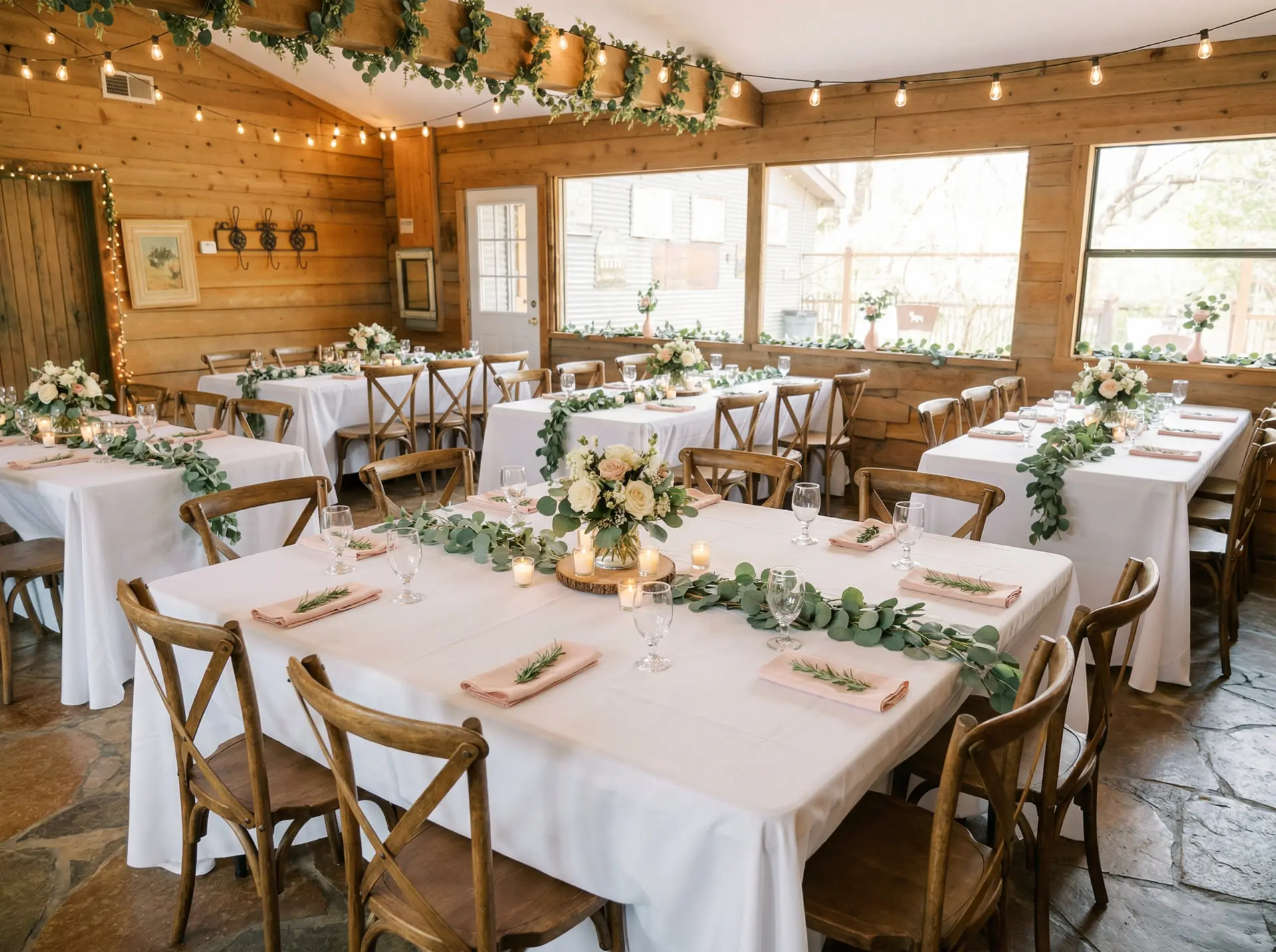
Tented receptions photograph beautifully and cost a fortune to do right. A built-in indoor hall is the difference between a venue you can rely on and a venue that becomes a logistics gamble in a Texas summer. The right hall has climate control that actually keeps up at one hundred and four degrees, real bathrooms (not portables), a working catering kitchen or staging area, dance floor space without rearranging tables mid-event, and enough power on the right circuits to run a band, a DJ, the lights, and the warming trays without flipping a breaker.
If you're touring a venue, ask to see the panel. Seriously. Ask where the catering trucks pull in. Ask where the band loads in. The romantic part of a wedding is the ceremony. The functional part is the reception, and the venue's infrastructure decides whether your reception runs smoothly or limps. Our Lily House and Zuehl Hall were both built specifically for events, not converted from something else — that's the difference between a wedding hall and a barn somebody put a chandelier in.
On-Site Lodging Changes the Entire Weekend
This is the single most under-asked question on the typical venue tour. Where do people sleep? A Hill Country wedding pulls family from out of state. They land in San Antonio or Austin, drive to the Hill Country, and then drive back to a hotel after the reception. Every couple has the same conversation a week before the wedding: half the family is at one hotel, half at another, the shuttle is going to be late, and Aunt Linda doesn't drive at night.
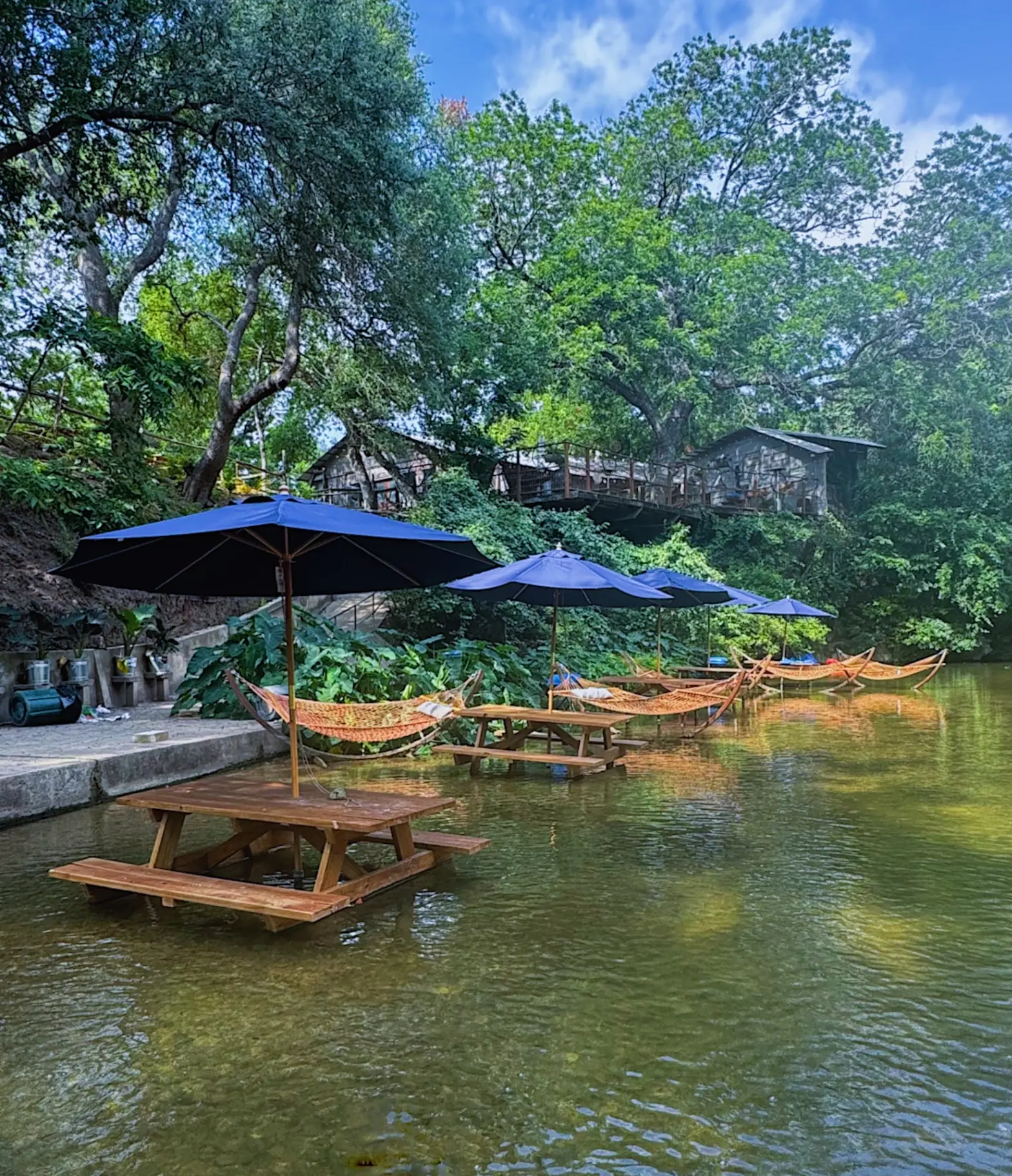
Venues with on-site lodging quietly solve all of that. The wedding becomes a weekend. The rehearsal dinner is on the property. The morning-after brunch is on the property. The bridal party gets ready in the same place they sleep. Through our sister property Son's Rio Cibolo, couples can put their immediate family and bridal party in waterfront cabins, safari cabins, glamping cabins, and bell tents, all on the same one hundred acres as the ceremony. If you're choosing between two otherwise comparable venues, on-site lodging is the tiebreaker. It's the single biggest upgrade to guest experience a venue can offer.
Catering: In-House, Preferred List, or BYO?
Hill Country venues fall into three camps on catering. Some have full in-house catering and require you to use it. Some have a preferred-vendor list — you pick from three or four caterers they've worked with for years. Some let you bring anyone you want. None of these is wrong, but each has trade-offs.
In-house catering is the simplest. One contract, one team, no coordination. The trade-off is menu flexibility — you eat what they cook well. A preferred-vendor list is the sweet spot for most weddings: real choice, with caterers who already know the kitchen, the load-in, and the venue manager's name. Open catering gives you total flexibility but it's also where weddings most often go sideways — a caterer who's never worked the venue is the most common single point of failure on a wedding day. Our property runs an in-house Texas-style catering program (brisket, sausage, and the sides handled the way they ought to be at a Texas ranch wedding), and we keep a short preferred list for couples who want a different cuisine.
How Hill Country Wedding Pricing Actually Works
Most couples are looking for a number — a 'package price' — and they get frustrated when venues won't quote one. Here's the honest reason: a Hill Country wedding venue isn't a product, it's a configuration. The price of a Saturday in May with two hundred guests, a full bar, in-house catering, valet, a string quartet for the ceremony, and seventy-two cabin nights for the family is genuinely not the same number as a Friday in February with eighty guests, beer-and-wine, no lodging, and DIY decor.
We work — and most reputable Hill Country venues work — on a consultative pricing model. You tour the property, we ask what kind of wedding you actually want, and we build a real quote against it. That's the only way to give you a number that means anything. Be wary of venues that quote you a flat 'all-inclusive' price before they know your guest count, season, day of week, bar program, or lodging needs. The price is real; what's not real is what's quietly excluded.
- Day of week and season have the biggest impact on price (Saturdays in peak season cost most; Friday and Sunday in shoulder season are the value picks).
- Guest count drives catering, bar, rentals, and staffing — it is by far the biggest line item.
- Bar program (full open vs. beer-and-wine vs. cash bar) can swing the budget by thousands.
- On-site lodging is usually quoted separately and often pays for itself in transportation savings.
- Day-of coordination is sometimes included, sometimes not — always ask.
A Realistic Hill Country Wedding Planning Timeline
Twelve to eighteen months is the right window for a Hill Country wedding. The most-requested venues book their best Saturdays a year out. Inside of nine months, you're choosing from leftover dates. Inside of six, you're paying premium for whatever's available. Here's the rough rhythm we see work well:
12–18 months out
Lock the venue. Lock the date. This is the only decision that everything else depends on, and it's the decision most couples spend the least time on relative to its impact. Tour at least three properties in person. Photos lie; properties don't.
9–12 months out
Photographer, planner (if using), catering decisions if not in-house, dress, save-the-dates. Block hotel rooms or lodging for out-of-town guests now — Hill Country weekends fill up months ahead, especially in spring and fall.
6–9 months out
Florist, band or DJ, officiant, transportation, rentals you don't get from the venue, attire for the wedding party. This is also the month to walk the property a second time with your photographer.
3–6 months out
Invitations, menu tasting, hair and makeup trials, bar program decisions, day-of timeline draft. Confirm shuttle and lodging assignments. Begin tightening the guest list — RSVPs are about to surprise you.
Final 8 weeks
Final headcount, seating chart, vendor walk-through at the venue, rehearsal dinner plan, marriage license. The week of, you should be doing nothing. If you're still making decisions in the last week, something earlier in the timeline got skipped.
Why Couples Choose Rio Cibolo Ranch
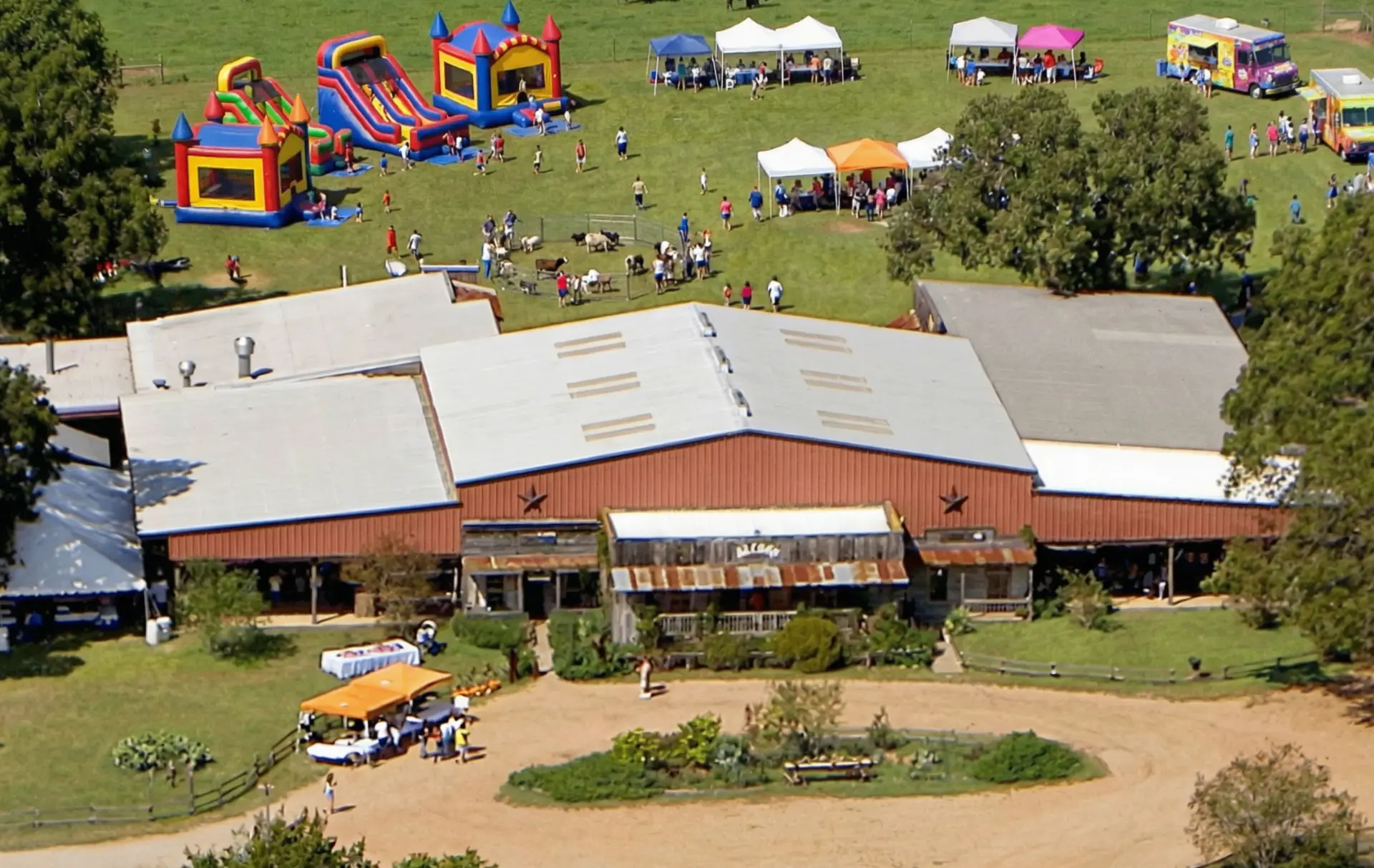
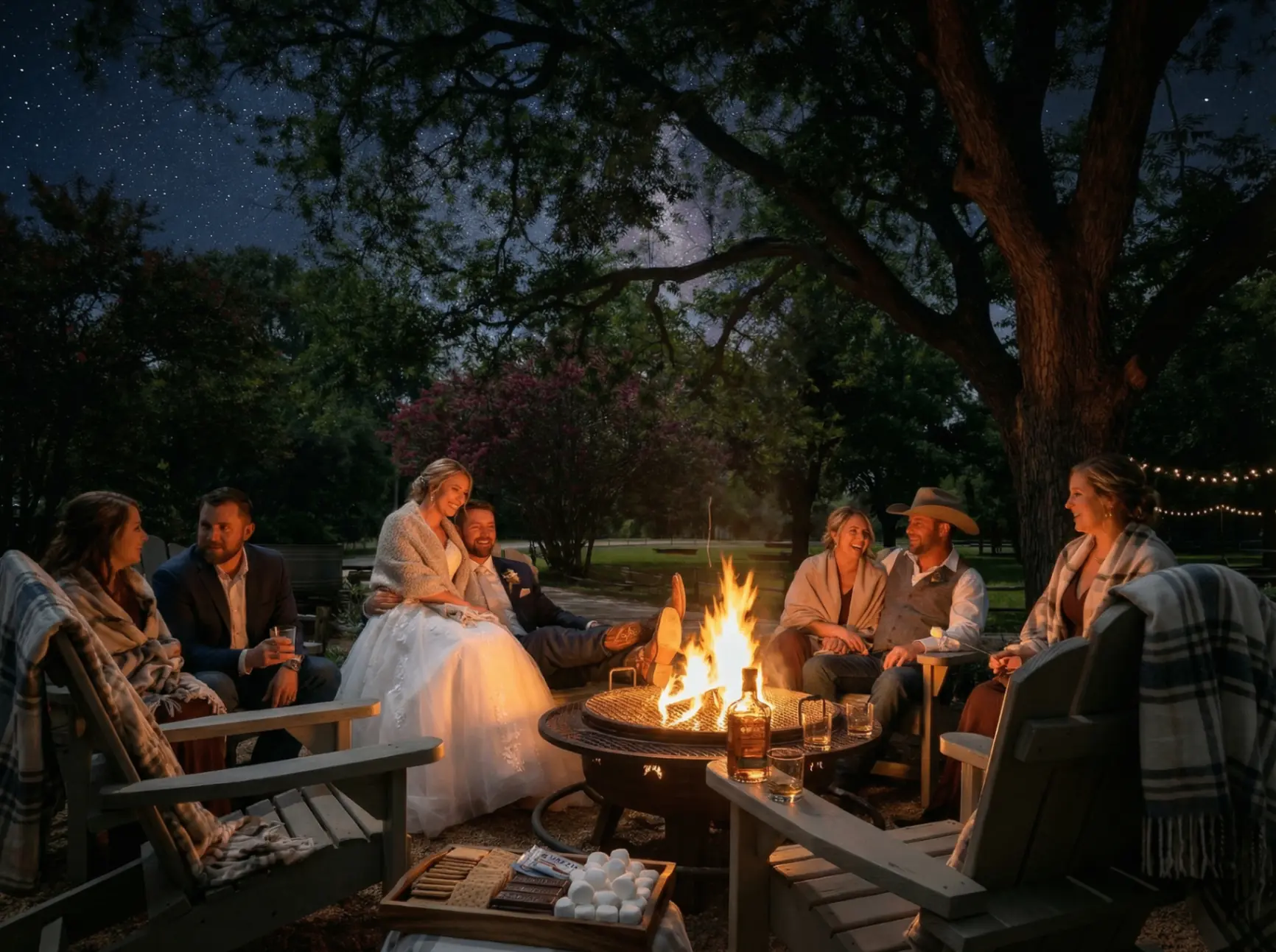
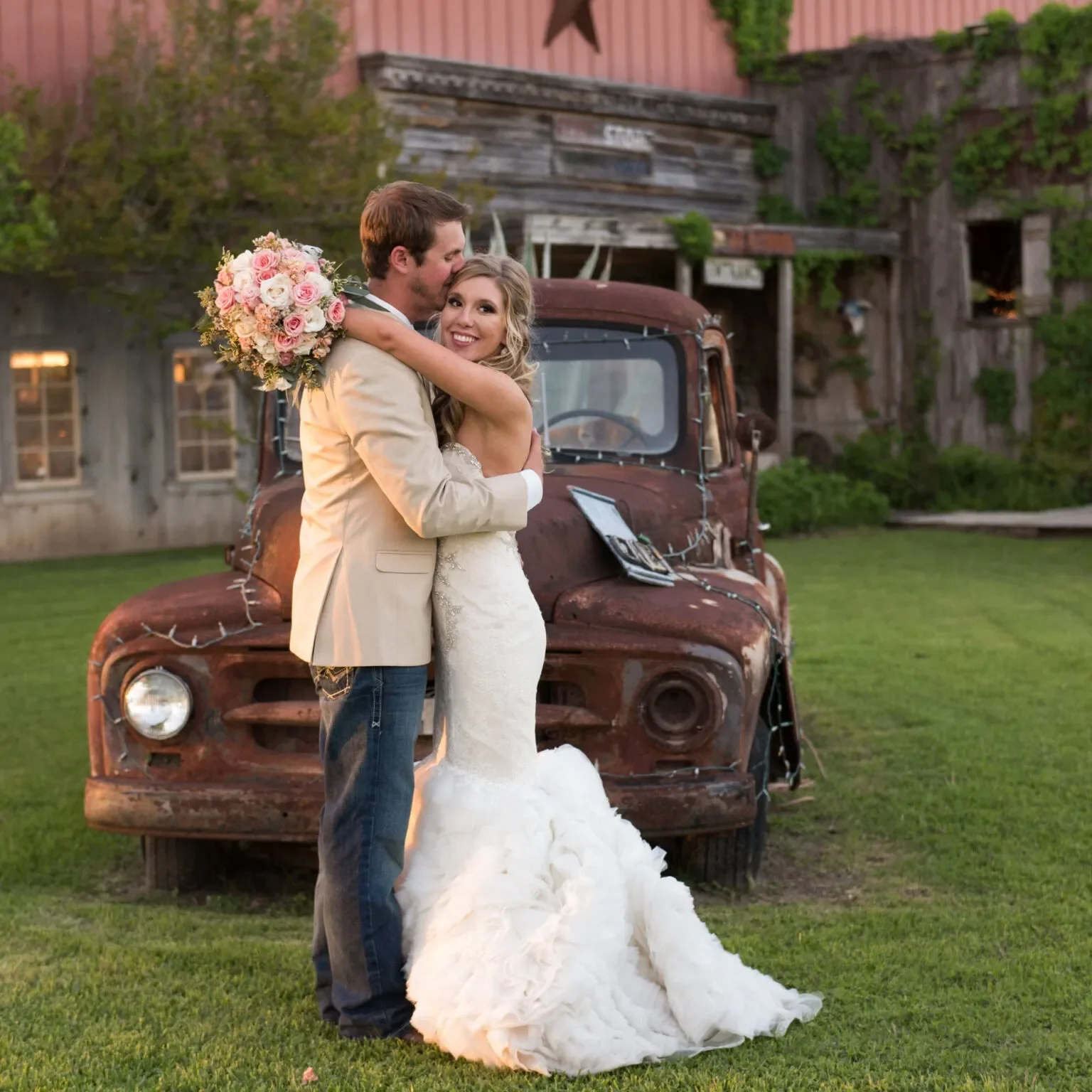
We won't pretend our property is right for every wedding. It isn't. We're a working Texas ranch, twenty-five minutes from downtown San Antonio, with cottonwood-shaded ceremony sites, two purpose-built indoor halls, longhorns and buffalo on the property, the Cibolo running the length of the land, and on-site cabin lodging through Son's Rio Cibolo. Couples who want a polished ballroom in a hotel are the wrong fit. Couples who want a real Texas place — one that photographs like Texas, sounds like Texas, tastes like Texas, and lets their family stay together for the whole weekend — tend to know it the moment they walk the property. If that's the wedding you're picturing, come walk it with us. Tours are private, unhurried, and free.
If you're still in the comparison phase, our photo library shows the property in different seasons, and our reunions and retreat coverage gives you a sense of how the same property handles other gatherings. The ranch is the same ranch — what changes is what you bring to it.
Frequently Asked Questions
Plan Your Visit
Come walk the ranch with us.
The fastest way to know if Rio Cibolo Ranch is right for your gathering is to see it in person. Tours are private, unhurried, and free.